
Super Bowl History - The Big Game Just Keeps Getting Bigger
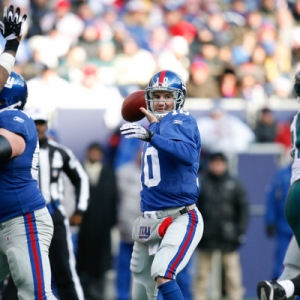
On Feb. 3, 2019, two teams - one from the American Football Conference and one from the National Football Conference - will collide at the Mercedes-Benz Stadium in Atlanta, Georgia, to contest Super Bowl LII. For those of you unfamiliar with Roman numerals, that is Super Bowl 53.
What's shocking about the fact that we've reached Super Bowl 53 is not the idea that only pro-football league in the world has an annual championship, similar to the Stanley Cup or World Series, but it's become somewhat of a national treasure. Not only are avid football fans invested in the big game from a daily fantasy perspective or more importantly a betting perspective, but the casual fans or those who could care less about the game itself are invested because of what the Super Bowl entails off the field of play, which we will get to later on.
From a history Super Bowl history standpoint, it's important to know that while pro football was formed in 1920, the "Super Bowl" as it's known now didn't come to fruition until 50 long years later in 1970. Prior to the game dubbed "The First Super Bowl," the two respective football leagues -- the NFL, which was largely considered the better league --- and the AFL, the second phase - would compete in a winner-vs.-winner showdown. This game was known as the "AFL-NFL World Championship Game" which if you ask me, doesn't make for a great t-shirt slogan.
It wasn't until Kansas City Chiefs owner Lamar Hunt proposed using the term Super Bowl when referring to the championship game. From 1966 to the 1970 merger between the two leagues, the AFL and NFL split four Super Bowls with Green Bay -- led by Vince Lombardi -- taking the first two titles. The AFL got on even terms by 1969, with the most memorable of the Super Bowl victories coming in 1967, when the New York Jets of the AFL (listed as 18-point underdogs) shocked the Baltimore Colts by a score of 16-7. This is the legendary "we are going to win" game, declared by Jets quarterback Joe Namath. Namath would go on to win Super Bowl MVP honors despite not throwing for a touchdown. A year later, the Chiefs beat the Minnesota Vikings, and the first four Super Bowls were in the books.
Super Bowl V - Present Day
For 10 years, from 1970 through 1980, three NFL franchises combined to win the Super Bowl eight out of the 10 times it was contested. The Pittsburgh Steelers led the way with four Lombardi Trophies (named after legendary Packers coach Vince Lombardi, who succumbed to cancer). These titles happened back-to-back in 1975-76 (Super Bowl IX and X) and again1979-80 (Super Bowl XIII and XIV). The Dallas Cowboys and Miami Dolphins contributed two Lombardi Trophies each, with Miami going back to back in Super Bowl VII and VIII, and the Cowboys winning in 1972 (Super Bowl VI) and 1978 (Super Bowl XII)
After the 1980 season, franchises from the NFL won a remarkable 16 of the next 20 Super Bowls that were played through the 1980s and 1990s. During these years, teams like the San Francisco 49ers, the Chicago Bears, Washington Redskins and the New York Giants stood out and combined to win 11 of the 20 Super Bowls.
From 1990 onwards, we've witnessed the Buffalo Bills lose four straight Super Bowl appearances, and we've witnessed the resurgence of the Dallas Cowboys as they won three titles in four years from 1993-96. We've also witnessed the emergence of the Denver Broncos (back-to-back wins in 1998-99) and the beginning of the New England Patriots dynasty, which began with three titles in four years between 2002 and 2005.
From an overall perspective, no franchise has won more Lombardi Trophies than the Pittsburgh Steelers, who lead the way with six titles. The Patriots, Cowboys, and 49ers are right behind them with five titles each, while the Packers and Giants have four. No team has played in more Super Bowls than the Patriots, with 10 appearances. And no team has yet won three Super Bowls in a row, despite seven franchises winning back-to-back titles.
Beyond the Field of Play
As I mentioned briefly in the introduction, the Super Bowl has transcended the game of football. It's no longer all about the X's and O's. Those are strictly for the coaches and players.
The Super Bowl is no longer just for football fans. The Super Bowl has become a spectacle that incorporates a week-long media frenzy, coupled with the excitement over newly released commercials, coupled with Super Bowl parties that feature excessive food and a copious amount of alcohol. It really is more than just a game. And for one night of the year, the NFL and its production team have to cater to a wider audience than your typical Sunday football fan.
And I haven't even mentioned the Super Bowl half time show yet. This (complete waste of time - in my opinion) typically becomes the biggest talking point long after the game is over. More people tend to remember who performed (and sucked) than they do the two teams that played or the final score of the game. But I guess when you are watched by more than 100 million people around the world, you better give them something to talk about. And that's why the halftime show features the biggest stars at the time such as Michael Jackson, U2, Madonna, Bruce Springsteen, Paul McCartney and Prince that have all graced the Super Bowl halftime stage.
Super Bowl Facts
Because the NFL is all about their bottom line, they have put a restriction on non-affiliated companies from using the term "Super Bowl". Instead, companies have to come up with other ways to refer to the Super Bowl, and most of the time it's "the big game".
Despite how many different franchises have won the Super Bowl, no Super Bowl winner has done so on their home field. This is because the Super Bowl venues rotate, and it's already hard enough to get into the Super Bowl. Furthermore, since the football season spans two calendar years, we use Roman Numerals as a way to identify them.
In terms of advertising, a 30-second spot costs upwards of $2 million today compared to $80,000 for a 60-second spot during the inaugural Super Bowl. And, lastly, in terms of ticket sales, face value for Super Bowl tickets range between $600-800. However, with scalpers and resale websites, you can expect to pay anyways between five to 10 times the value.
Doc's Sports is offering $60 worth of member's picks absolutely free - no obligation, no sales people - you don't even have to enter credit card information. You can use this $60 credit any way you please for any handicapper and any sport on Doc's Sports list of expert sports handicappers. Get $60 worth of premium members' picks free .
Most Recent Super Bowl Betting
- Free Super Bowl Props Predictions for 2024
- Chiefs Looking at Potential Dynasty in Super Bowl 58
- 2024 Super Bowl Betting for Dummies and Novice Bettors
- Handicapping Super Bowl Injuries
- Super Bowl Handicapping: Expert Tips for Betting Success
- Handicapping the Super Bowl Quarterbacks and Best Bets for Props
- Super Bowl Props: Head-to-Head Matchup Predictions
- Super Bowl Betting Public Action Report
- 2024 Alternate Super Bowl Lines can Maximize Betting Profits
- Super Bowl Wagering Advice: Block out the Noise, and Ignore the Spread!