
Foreign Horses in the Kentucky Derby
by Trevor Whenham - 5/3/2011

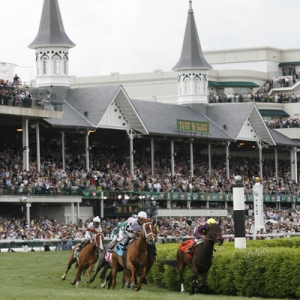
If and when Master of Hounds enters the starting gate for the 2001 Kentucky Derby, he’ll join a small club of horses — foreign-bred or -based horses that have run in the race. Many people, including myself, consider this the greatest horse race in the world, but it features almost exclusively American horses.
On the surface you would think it would make sense for foreign horses to tackle the Derby. Horses in Europe, Australia, Japan, and South America all tend to be bred more for stamina than speed — the opposite of what is going on in the U.S. Even if horses are only based outside of the U.S. while still being American bred they are likely trained with much more consideration to stamina than their American cousins. That could be very helpful for the grueling Derby distance.
There are a few problems that make it difficult, though. First of all, horses born in the southern Hemisphere have different birthdays. All North American horses turn a year older on January 1st, so they tend to be born in the first few months of the calendar year. Southern hemisphere thoroughbreds have their birthday on August 1st, so they are generally born in our late summer or fall. That means that southern hemisphere three year olds are several months older than northern hemisphere ones. When horses are just three years old they are not mature — they are the equivalent of human teenagers — so several extra months would be an overwhelming advantage. As a result, southern hemisphere horses can’t enter the race.
European horses don’t have that working against them, but they have another big problem. The criteria for earning a spot in the race is graded stakes earnings, and that only counts money won in American races — with a few exceptions of races in Dubai. In order for a European horse to aim for the Derby, then, they have to have previously had an American campaign or one in Dubai. That’s an expensive and difficult challenge for young European horses and their trainers, so few consider it worthwhile. There are also quarantine issues that make it challenging to bring a horse over and make him comfortable and ensure he stays in top form.
Master of Hounds qualifies for the Derby because he was second in the UAE Derby in Dubai to earn enough money to make the list. This isn’t the first time he has run at Churchill, though — he was a disappointing sixth last fall as the favorite in the Breeders’ Cup Juvenile Turf. This is his first race on dirt so there are some major concerns about his legitimacy. He will have Garrett Gomez, the best jockey never to have won a Derby, aboard, though, so he’s in good hands.
Here’s a look at four prominent foreign runners in the past:
Arazi — You can’t talk about foreign runners without talking about Arazi. He was a Kentucky-bred horse, but he spent his formative time in France, and had his early success there so he was considered a European invader. After success there he made his mark in the States in the Breeders’ Cup Juvenile. He destroyed an impressive field in the most remarkable, dominant performance in Breeders’ Cup history, and Arazi insanity was born. Despite a knee injury, arthroscopic surgery, and no prep races between the Breeders’ Cup and the 1992 Derby he was made the overwhelming favorite in the race — more money was bet on him to win than all the other horses combined. He made his trademark bold move around the turn but ran out of gas after only getting up to third and wound up a brutal eighth behind unheralded Lil E. Tee.
Bold Arrangement — In 1986 he became the highest-placed European runner ever when he was second behind Ferdinand. He got off to a rough start and looked like he was destined to disappoint, but he staged an impressive rally to move up through the crowd. Down the stretch his stamina advantage was evident as he held his ground and wound up second. Only the even more impressive closing drive of Ferdinand stopped him from wearing roses.
Johannesburg — Johannesburg’s story bears striking similarities to Arazi’s. He was also a Kentucky-bred runner who was based in Europe. He also won the Breeders’ Cup Juvenile — in 2001 in his case — in devastating fashion. He wasn’t the favorite in the Derby, but he was among them. Like Arazi, he was a very disappointing eighth.
Canonero II — The 1971 Derby and Preakness winner remains the only foreign-based runner to win the Derby. Born in North Carolina with a crooked front leg, he was sold for just $1,200 as a yearling and sent to Venezuela. Unimpressive leading up to the Derby, the horse was very lightly regarded. He lived up to those expectations early when he ran in 18th after half a mile, but then he launched an incredibly powerful move to win the race by nearly four lengths. It remains one of the more unexpected performances in a race full of them.
Most Recent Kentucky Derby Picks and Predictions
- Best Bets for the 2024 Kentucky Derby
- 2024 Kentucky Derby Predictions and Recommended $100 Wager
- Kentucky Derby Betting Trends
- Best Trifecta Bets for the Kentucky Derby 2024
- 2024 Kentucky Oaks Predictions and Recommended $100 Wager
- 2024 Kentucky Derby Long Shots: Advice and Tips for Finding Value
- 2024 Kentucky Derby Handicapping: What you Should Know Before Betting Run for the Roses
- Will There Be a Triple Crown Winner in 2024? Odds and Expert Predictions
- Horses that Can Win the Kentucky Derby in 2024
- Kentucky Derby Wagering Strategies and Expert Handicapping