
March Madness Heroes Noone Talks About Anymore
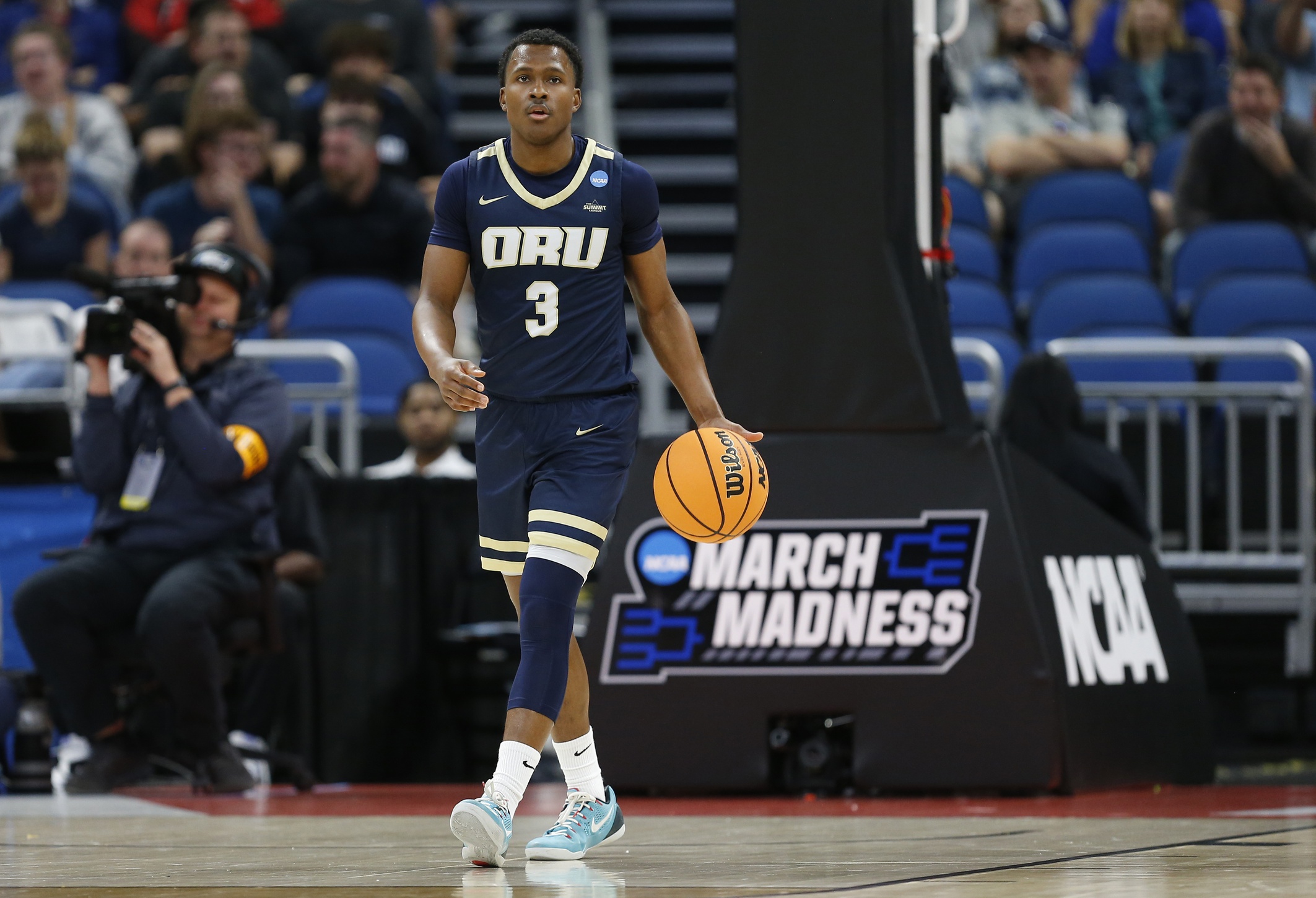
March Madness is the time where nothing else matters. Emails, work meetings, all of that becomes extra stuff that needs to be put aside, because now is the time to lock in your picks and kick back for an unlimited marathon of basketball.
Season after season, there has always been a handful of players who steal the spotlight in the Big Dance and take matters into their own hands, and they seemed to be forgotten about when debating March Madness legends. So, let's dial the clock back and look at six players who made March Madness their own personal shooting practice.
Doc’s Sports offers college basketball expert picks for every game on our NCAA basketball predictions page.
Jimmer Fredette
No player in modern college basketball made opposing coaches look more personally frustrated than the BYU guard who averaged 28.9 points per game and led every Division I player in scoring during the 2010-11 season.
When March arrived, Fredette carried BYU to the Sweet 16 for the first time in 30 years, dropping 34 points on Gonzaga in the Round of 32, shooting 7-of-12 from three-point range. He averaged 27.7 points per game across the tournament, and there was genuinely no defensive scheme that slowed him down for a full 40 minutes. Double teams got ripped apart. Switching off pick and rolls got punished.
The run ended in the Sweet 16 against Florida, a brutal overtime loss that left everyone wondering what another week of Jimmer in March could have looked like. Despite the loss, Fredette still had his way, dropping 32 points. College basketball handed Fredette the stage, and it's safe to say he left it all out on the floor—his 3-point range included.
Adam Morrison
Gonzaga arrived at the 2006 tournament as a No. 3 seed with a player who had led the entire country in scoring at 28.1 points per game and recorded 13 games of 30+ points during the regular season. Adam Morrison was the Zags' life support, and he made it look effortless when March arrived.
From the jump, Morrison came out of the gate in the Round of 64 against Xavier and made it clear he had no interest in passing the ball much, dropping 35 points as Gonzaga came from nine down to win 79-75. Then came Indiana in the Round of 32, where Morrison finished with 14 points and 9 rebounds, pushing the Zags ahead 90-80 and into the Sweet 16. Despite falling short against UCLA, the Gonzaga forward did everything he could, recording another 24 points on 10-of-17 shooting in a tough two-point loss.
Morrison was the face of that March Madness run—73 combined tournament points across three games, and none of it gets remembered. What people remember is the image of him on the floor in tears, which is one of the more unfair takes on the tournament.
Glen Rice
Long before anyone was refreshing bracket apps and arguing about seed lines, a Michigan senior put together a six-game March run in 1989 that nobody in the sport has done since. Glen Rice scored 184 points across the entire tournament, shooting 57% from the field and knocking down 27 3-pointers.
Unlike some players on this list, there was no off-game for Rice. He dropped 23 in the Round of 64 against Xavier, 36 in the Round of 32 against South Alabama, 34 in the Sweet 16 against North Carolina, 32 in the Elite Eight against Virginia, 28 in the Final Four against Illinois, and 31 in the title game against Seton Hall.
What makes the whole thing even more incredible is that it happened before the internet existed to talk about it. No viral clips, no Twitter threads. Just Rice putting up arguably the greatest individual scoring performance in NCAA Tournament history, and almost nobody brings it up.
Max Abmas
Oral Roberts was a 15-seed in 2021, and the bracket had them marked for a quick first-round exit like every other double-digit seed that showed up. Nobody told Max Abmas. The 6-foot-1 guard led the entire country in scoring at 24.5 points per game and arrived in Indianapolis ready to go, to say the least.
He dropped 29 points and shot 50% from long range, pushing the Golden Eagles past Ohio State in the first round, then came back with a 26-point, seven-assist game against Florida in the second to send ORU to the Sweet 16 for the first time since 1974. Oral Roberts then fell short to Arkansas in the Sweet 16, but by that point Abmas had already made his mark. Abmas became the first player from a double-digit seed to score 25+ points in three consecutive tournament games since Stephen Curry in 2008.
What made Abmas so entertaining to watch was that ORU's entire offense ran through him, and he carried it without flinching. Three games, three straight 25-point performances. That kind of March Madness legacy doesn't come around often, and it deserves a lot more attention than it gets.
Buddy Hield
Oklahoma's 2015-16 season belonged to Buddy Hield, and everyone else was just along for the ride. He averaged 25 points per game, led the nation in three-pointers made, and swept every major player of the year award on the market. When the tournament started, it became clear pretty quickly that nobody had a real plan for stopping him.
He warmed up with 27 points against Cal State Bakersfield in the first round, then turned it up with 36 points and six made triples against VCU in the Round of 32. Then came the Elite Eight against top-seeded Oregon, where he went for 37 points and drilled eight three-pointers. Oklahoma won 80-68 and punched their ticket to the Final Four for the first time since 2002, with Hield averaging 29.3 points per game across four wins.
Villanova held him to just nine points in the Final Four and sent Oklahoma home, but that's beside the point. Hield made Oklahoma's bracket run that much easier, with four rounds of unlimited range and built a March Madness legacy deserving permanent real estate in the conversation.
Frank Kaminsky
Not many seven-footers have made a March Madness bracket their personal playground, but Frank Kaminsky was not many seven-footers. The Wisconsin big man could drain threes, dish out of the high post, and put the ball on the floor, and in 2015 the rest of the bracket had absolutely no answer for any of it.
He opened the tournament against Coastal Carolina with 27 points and 12 rebounds. Then 16 points against Oregon in the Round of 32, keeping Wisconsin title odds alive. The Elite Eight against Arizona was where things escalated, with Kaminsky dropping 29 points to send the Badgers to their second straight Final Four.
Then came the game most remember: 20 points and 11 rebounds against an undefeated 38-0 Kentucky team in the Final Four, Wisconsin going on a 15-4 run in the final four minutes to end the Wildcats' perfect season. He followed that up with 21 points and 12 rebounds in the national championship game against Duke, where the Badgers fell 68-63.
Kaminsky averaged 20.6 points and 10.6 rebounds across those five games as the unanimous Player of the Year. That kind of March Madness run deserves to be talked about every single year. It just isn't.
Get college basketball picks on every single game, or if you want our very best bets by the experts, sign up for your free $60 account with a guarantee.
Most Recent March Madness Betting
- 2026 Final Four Props with Best Bets, Odds and Predictions
- 2026 MOP Betting Odds and Predictions for the March Madness Most Outstanding Player
- 2026 March Madness Final Four Best Bets and Expert Betting Predictions
- 6 Role Players Who Took Over March Madness
- Sweet 16 Bracket Picks: Mapping Out the Eventual National Champion
- Sweet 16 Best Bets ATS
- March Madness Heroes Noone Talks About Anymore
- 2026 March Madness Bracket Predictions: Midwest Region
- March Madness Bracket Help: Finding First Round Upsets
- 2026 March Madness Bracket Predictions: South Region