
NBA Franchises That Did Everything Right and Still Lost Their Star
The belief that winning games is the only way to keep a superstar is a dead-end strategy that front offices continue to never learn from. Teams are taught that if they draft correctly, spend into the luxury tax, and build a consistent winner, their franchise player will have no reason to look for the exit.
However, the modern NBA has proven that a perfect roster doesn't guarantee a star's return, no matter the outcome of the season. Time and time again, teams have paid the price tenfold, only to find that a hefty check and a winning culture cannot always compete with the pull of a larger market or a change of scenery.
Let’s look back at six teams that followed the blueprint and still watched their stars walk away for nothing.
Doc’s Sports offers NBA expert picks for every game on our NBA predictions page.
Orlando Magic: Shaquille O’Neal (1996)
Reaching the NBA Finals within six years of a franchise's birth doesn't happen by accident. It happens when a team can land Shaquille O'Neal. The Magic knew right away that they had found their franchise big man in O'Neal, and before the league knew it, he was one of the most dominant centers it had ever seen. Heading into the summer of 1996, that was when Orlando decided to get cute, and it paid the price.
O'Neal wanted to stay with the team, but instead of writing the man a max contract, which the Magic had the right and budget to do, they came in with a lowball offer while other big men across the league were cashing nine-figure checks.
Then, as if the insult wasn't enough, the Magic went ahead and actually criticized O'Neal's rebounding during the negotiation call. After the news spread across the league, Lakers executive Jerry West called O'Neal and offered him a seven-year, $121 million deal, and the rest was history.
Orlando hasn't won a title since. O'Neal has four rings. You do the math.
Denver Nuggets: Carmelo Anthony (2011)
The Denver Nuggets spent years designing a roster around Carmelo Anthony that could compete in the Western Conference, and it finally came to fruition in 2008 when it traded for Chauncey Billups, who was coming off a title run a few seasons earlier with the Pistons, and immediately made Denver feel like a real contender. The Nuggets reached the Western Conference Finals the following season and looked like a team that was only going to get better.
The Nuggets consistently won 50+ games, made the playoffs every year, and surrounded Anthony with legitimate pieces in Nene, Kenyon Martin, and J.R. Smith. The front office did its job, and when Anthony's contract was up, it had every intention of keeping him and was willing to drop the money bags. Then Anthony decided he wanted to go home.
A New York native, Anthony called it quits in Denver and wanted to play back home at Madison Square Garden. The funny thing is Anthony was eligible for a max contract extension with the Nuggets but refused to sign one, making it clear he wanted out.
The Nuggets had built a winning roster around him, paid him well, and kept the team competitive year after year. None of it was enough. He forced a trade to the Knicks in 2011 and Denver got a fraction of what it deserved in return. The franchise had held up its end of the deal. Anthony just wanted to play in his city.
Cleveland Cavaliers: LeBron James (2010)
The Cleveland Cavaliers did everything a franchise is supposed to do around LeBron James. It built a defense that ranked among the league's best, brought in All-Star Mo Williams and veterans like Antawn Jamison and Shaquille O'Neal, and made it clear winning now was the only priority.
For two straight seasons Cleveland had the best record in basketball, winning 66 games in 2009 and 61 in 2010, and James was the runaway MVP both times. The front office built the whole operation around making his life easier, spacing the floor and letting him operate.
When James' contract was up in 2010, Cleveland was ready to pay him whatever it took to keep him. The Cavaliers had given him every reason to stay. Instead, in the summer of 2010, James announced he was taking his talents to Miami in a television special that rubbed pretty much everyone the wrong way, especially Cavaliers fans.
James turned down a max contract extension from Cleveland to join Dwyane Wade and Chris Bosh on a team he practically built alongside Heat head coach Erik Spoelstra. Some players want a title more than they want to be the man, and James decided he would rather chase rings than carry Cleveland on his back any longer.
Oklahoma City Thunder: Kevin Durant (2016)
You would think if a team drafts three consecutive league MVPs, the league would be witness to a dynasty in the making, right? Well, that's what it looked like at first with the Thunder. The Oklahoma City Thunder managed to snag Kevin Durant, Russell Westbrook, and James Harden in three straight drafts, and even after trading Harden away, it remained one of the most dangerous teams in basketball. By the 2015-16 season Durant was playing the best basketball of his career, averaging 28.2 points per game, and the front office had built a tough roster around them with Steven Adams and Serge Ibaka making life miserable for anyone who drove the lane.
Oklahoma City had Golden State dead to rights in the 2016 playoffs, up 3-1 in the series against the 73-win Warriors and one win away from the Finals, but the Thunder couldn't hang on, eventually blowing the lead and losing the series 4-3. From there, Durant decided "if you can't beat them, join them," and that's exactly what he did.
Durant signed with Golden State that summer. He left a top-five teammate in Westbrook, a contending roster, and a real shot at a title to join the team Oklahoma City had just nearly eliminated. The Thunder didn't exactly fail Durant. He just decided he would rather join them than beat them.
Utah Jazz: Gordon Hayward (2017)
Mid-market teams that want to compete have one real option: build a defense and invest in younger talent. The Utah Jazz did exactly that. By 2016-17, it had one of the better defenses in the league, and Gordon Hayward was the centerpiece of all of it, earning his first All-Star nod and averaging 21.9 points per game in a system that fit him perfectly.
The Jazz won 51 games and knocked off a Clippers team that was supposed to be too good for them, pushing through seven games in a series that announced Utah as a program worth watching. They came back that offseason and did what any well-run franchise would do: offered Hayward the max and handed him the keys to a roster that was only going to get better.
That's when things went sideways. Hayward declined and took the Celtics' offer instead. You can't really blame him for wanting a reunion with former Butler coach, Brad Stevens, but it stung. Utah didn't cut corners, didn't cheap out, didn't mismanage the timeline. It just couldn't outbid Boston.
Toronto Raptors: Kawhi Leonard (2019)
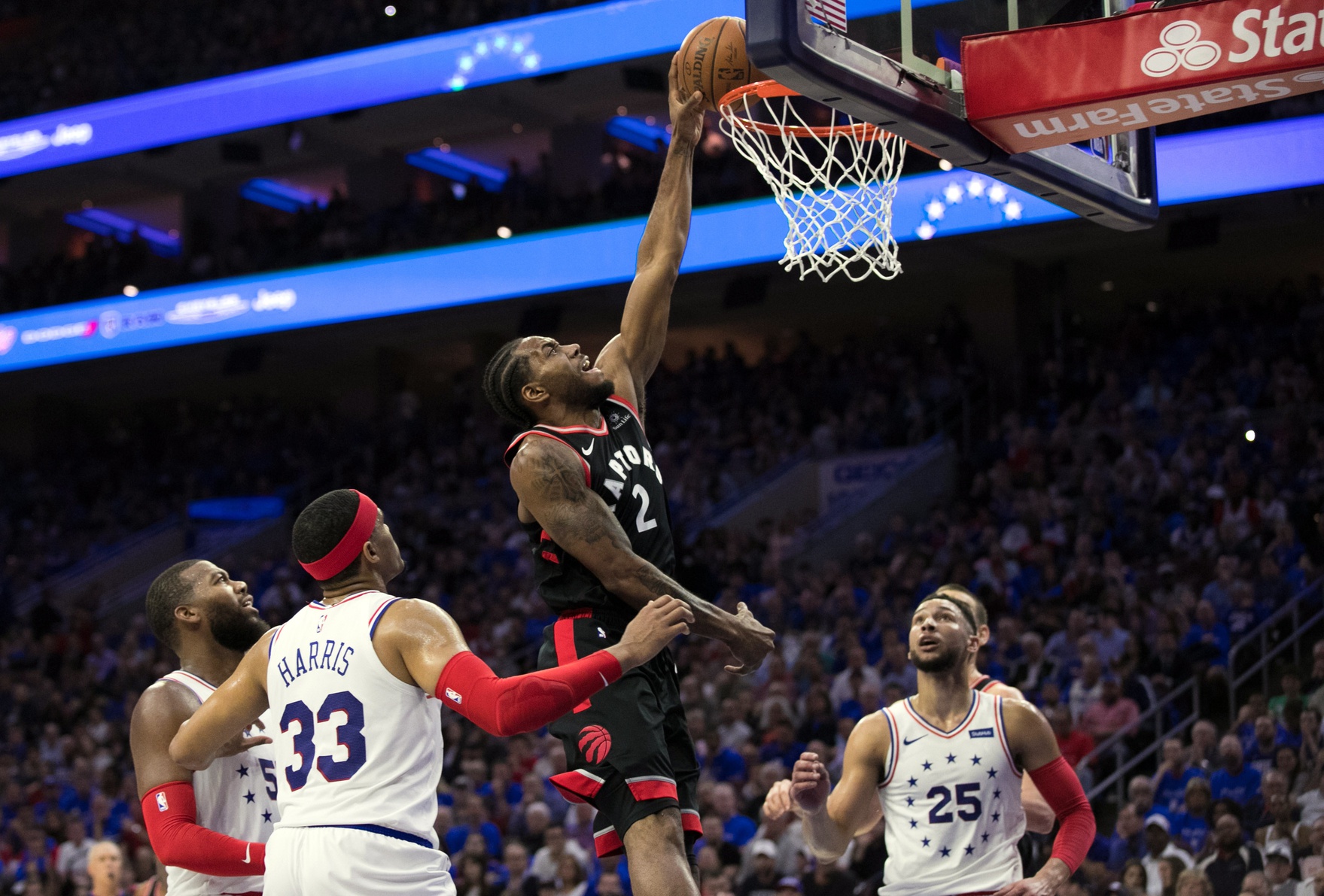
Trading for a rental and winning a championship in the same season is not supposed to happen. The Toronto Raptors pulled it off anyway. After acquiring Kawhi Leonard in 2018, management built an entire program around him that kept him to 60 regular season games, making sure he was right when it actually mattered.
Toronto did everything it could, surrounding him with Kyle Lowry, Pascal Siakam, Marc Gasol, and role players who knew their jobs.
Toronto won 58 games, then went out and won the whole thing. Leonard was the reason, averaging 30.5 points and 9.1 rebounds through the postseason while dismantling every team in his path. The Raptors gave him everything he needed, and it still wasn't enough. They came back with a five-year max offer and a chance to defend a title.
Leonard signed with the Clippers anyway, just weeks after the parade. There is no version of this where Toronto did something wrong. The organization managed his health, built the right roster, won the championship, and made the offer. Leonard just wanted to go home to L.A., and no contract was going to change that.
Get NBA picks on every single game, or if you want our very best bets by the experts, sign up for your free $60 account with a guarantee.
Most Recent NBA Handicapping
- 2026 Houston Rockets Predictions with Best Bets and Odds to Win NBA Championship
- 2026 Golden State Warriors Predictions with Best Bets and Odds to Win NBA Championship
- 2026 Detroit Pistons Predictions with Best Bets and Odds to Win NBA Championship
- 2026 Denver Nuggets Predictions with Best Bets and Odds to Win NBA Championship
- 2026 Dallas Mavericks Predictions with Best Bets and Odds to Win NBA Championship
- 2026 Chicago Bulls Predictions with Best Bets and Odds to Win NBA Championship
- 2026 Cleveland Cavaliers Predictions with Best Bets and Odds to Win NBA Championship
- 2026 Charlotte Hornets Predictions with Best Bets and Odds to Win NBA Championship
- 3-for-1 NBA Basketball Picks Season Special
- 2026 Brooklyn Nets Predictions with Best Bets and Odds to Win NBA Championship