
MLB Managers Who Changed the Game Without Ever Winning a World Series
Let’s be honest: the obsession with World Series rings is an easy way to judge a manager's intelligence, success, and impact. For years, baseball fans have been groomed by analysts with the mindset that a trophy is the only thing that validates a career. However, some of the most influential coaches and minds to fill out a lineup card spent their entire lives chasing a title they never won.
The way the modern game is played is a direct result of coaches who were too busy breaking rules to worry about October. These six managers didn’t need a ring to prove they were ahead of the curve; they just needed a chance to out-think everyone else until the rest of the league was forced to copy them. Let’s look at six managers who impacted the game we know today but never walked away with a title.
Doc’s Sports offers MLB expert picks for every game on our baseball predictions page.
Gene Mauch
Treating a baseball diamond like a massive chessboard is a great way to earn a reputation as a genius, but it can also rack up a lot of losses in the process. Gene Mauch managed 3,942 games over 26 seasons without ever winning a pennant, which makes it sound like he might be one of the worst coaches ever, but there is much more to it than the win-loss column.
Mauch leaned heavily into a “small ball” style that prioritized defense, speed, and base-to-base hitting over letting his lineup swing for the fences on every pitch. He was also a primary reason why we see double switches nowadays, constantly tinkering with his lineup to ensure his pitching staff didn’t have to bat until later in the game.
While these methods were laughed at then, his strategies are just everyday calls by managers in the game we know now, practically making him a founding father. He took the 1964 Phillies to the brink of a title before a historic collapse and led the 1982 Angels to within one game of the World Series.
Even without a ring, Mauch’s fingerprints are all over the modern game's tactical gameplanning. He played the long game better than anyone, proving that thinking outside-the-box is often from the refusal to play by someone else's outdated playbooks.
Buck Showalter
Turning a 100-loss team into a playoff threat should guarantee any manager a long-term contract, but in a baseball dugout, it usually just gets you a "thanks for the help" and a pink slip. This was the Buck Showalter story. He made a career out of taking sinking franchises and turning them into playoff contenders, only to watch another manager come around the following season and hold the trophy he polished.
He’s the only coach to win Manager of the Year with four different franchises in four different decades, which is just a way of saying he’s the ultimate high-level janitor for broken teams. Much like Gene Mauch, he was a strict, obsessive micromanager who believed that if you didn't have the discipline to tuck in your jersey or cut your hair, you didn't have the discipline to win a ballgame.
Showalter dragged the Yankees from the bottom half of the AL East all the way to first place by 1994, setting the stage for a dynasty that he was never allowed to be a part of. After being pushed out of New York, he went to Arizona and somehow dragged an expansion team to its first-ever playoff appearance in only its second year of existence.
On top of that, Showalter even pulled the same trick in Baltimore, taking a franchise that had spent years at the bottom of the standings and making them a top-tier playoff threat. With 1,727 career wins and a reputation for being the most prepared person in the building, Showalter proved that mastering the fundamentals can change a team's entire culture through stubbornness and force of will.
Bobby Valentine
Sneaking back into a dugout wearing a fake mustache and sunglasses is pure comedy for any sports fan to witness, but for a manager who was busy redesigning the global baseball map, it was just another day at the ballpark.
In 1989, Bobby Valentine was invited to Japan specifically to teach coaches about his strategy and the concept of pitch counts. At a time when the NPB was still overworking pitchers, he pre-empted the modern era by treating pitch counts like reps at the gym—making sure arms on the mound were as efficient as possible. The moment a dip was noticed in their delivery or energy, they were yanked from the game.
The win-loss column isn't much to look at on the surface, but with 1,186 wins and 1,165 losses across 2,351 games, his MLB career was about more than just a single World Series appearance in 2000. Interestingly enough, unlike other managers on this list, Valentine made a point to prioritize fan engagement and was one of the first to push for letting kids run the bases and hosting autograph sessions.
He even personally hosted ballroom dancing classes for fans, a move that made sense once people realized he was a former competitive ballroom dancer. His impact on the game is not by wins or titles, but by creating a place where tactics and entertainment lived together, cementing his spot as a manager who completely changed the game despite never winning a World Series.
Frank Robinson
There are managers, player-managers, and then there’s Frank Robinson, who excelled at both. Robinson broke the most obvious barrier in baseball history when he became the first Black manager in 1975 with the Cleveland Indians, and he did it while still being expected to produce at the plate.
He was one of the last true player-managers, famously hitting a home run in his first at-bat of his first game in charge just to remind everyone who was actually in charge. Robinson spent 16 seasons in the dugout, proving that a superstar’s talent could actually translate into leadership instead of just being a “what-if” thought for front offices.
Winning just 47% of games over a 16-year coaching career is not exactly something to clap for, but he still finished with 1,065 career wins and took home the 1989 Manager of the Year award after leading a massive turnaround with the Baltimore Orioles. That season was a miracle in itself, as he dragged a team that had just suffered through a 101-loss disaster the previous year into a pennant race that came down to the wire.
Listen, winning is far from being the highlight of Robinson’s coaching tenure, but he showed the league that a manager can change the entire direction of a franchise through grit alone, even if he never walked away with a World Series title.
Felipe Alou
Having to manage a powerhouse team on a budget thinner than a shoestring is usually a sign of a disaster season in the making, but in Montreal, it was standard procedure—at least for Felipe Alou.
Alou emphasized that developing young talent for little money could not only save a franchise's finances but also help a team remain successful for a steady period of time. His primary strategy was to take younger, cheaper players and program them until they became outstanding ballplayers. This philosophy paid off almost immediately, proving that high-level player development and a bit of authority were worth more than a massive bank account, especially while working with the second-lowest payroll in the National League in 1994.
The 1994 Expos remain one of the greatest stories in the history of the sport. Under Alou’s management, it held the best record in the major leagues until the mid-August strike wiped out the entire postseason.
Alou finished his career with 1,033 wins, 691 of which came during his tenure with the Expos. To this day, he remains a legend for showing the league that teams don't need to be the highest bidder to build a winner, solidifying his place as a manager who changed the game without ever winning a ring.
Don Zimmer
Spending 66 consecutive years in a professional uniform is a level of commitment that borders on mental insanity, but for Don Zimmer, it was the only way to live. He was the definition of a “baseball lifer” who saw every evolution of the sport firsthand, transitioning from an infielder for the Brooklyn Dodgers to a manager who led four different franchises.
His time in the manager's seat was defined by a fearless and often erratic style that kept the rest of the league on its toes.
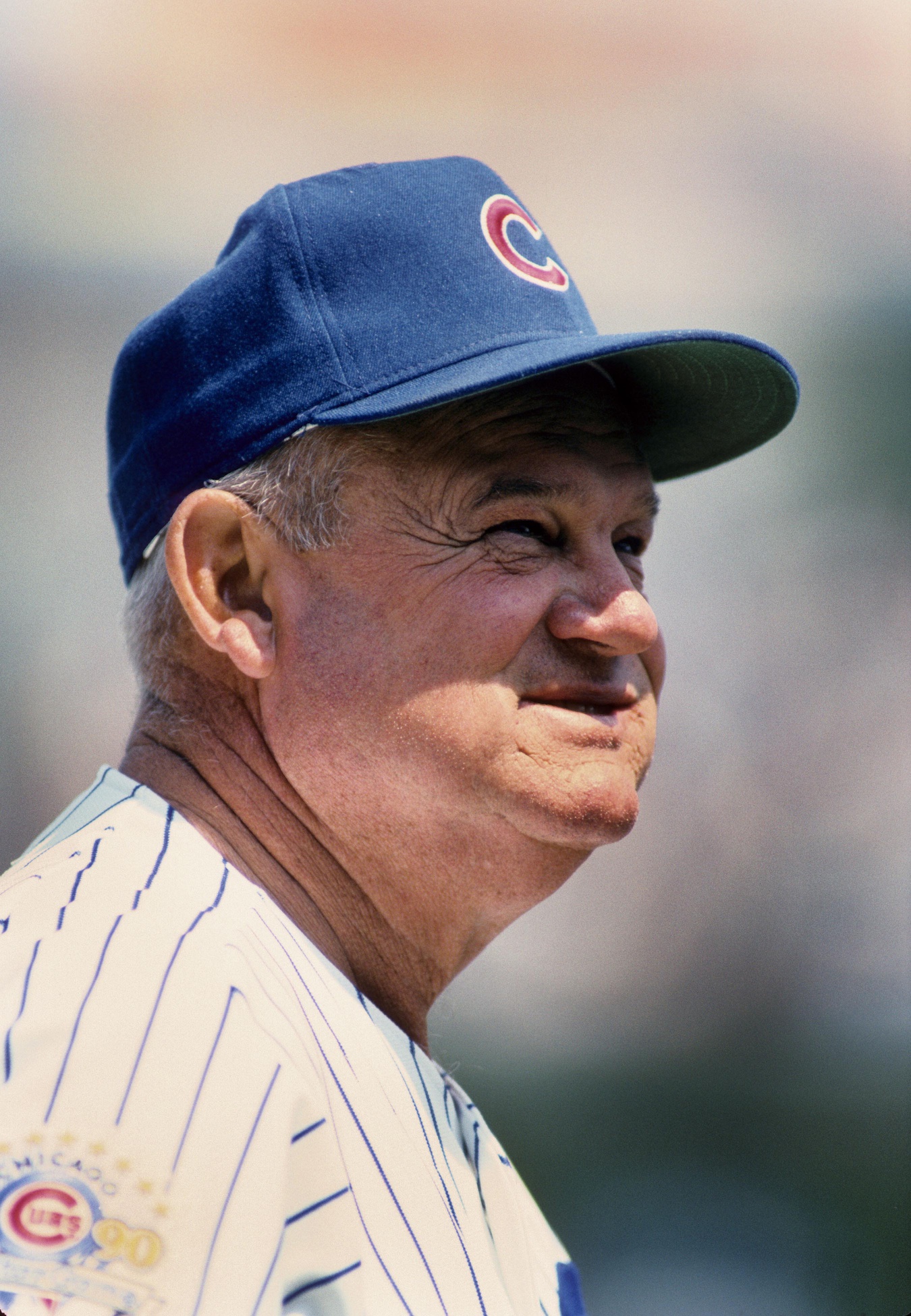
The 1989 “Boys of Zimmer” Cubs remain one of the most beloved teams ever to put on a Chicago uniform. What made it so special? Zimmer led a young, undervalued roster that nobody expected to make the postseason, let alone a division title, to a 93-win season, earning Manager of the Year honors in the process.
He finished his managerial career with 885 wins and did it by ignoring the textbook; he managed by gut and instinct, proving that a deep knowledge of the game could be just as effective as any spreadsheet. Even without a World Series ring as a manager, Zimmer’s presence in the dugout for over half a century shaped the culture of modern clubhouses today.
Get MLB picks on every single game, or if you want our very best bets by the experts, sign up for your free $60 account with a guarantee.
Most Recent Baseball Handicapping
- MLB Feuds That Tore Teams Apart From the Inside
- 59 MLB Financial Statistics for 2025
- MLB Trades That Accidentally Built a Dynasty for the Other Team
- 2026 World Series Predictions with Futures Betting Odds
- Most Ejected Managers in MLB History
- MLB Managers Who Were Hired Just to Be Fired
- MLB Managers Who Changed the Game Without Ever Winning a World Series
- MLB Franchises That Were Dominant for a Decade and Never Got Back There
- 2026 MLB Season Win Total Predictions
- 2026 Atlanta Braves Predictions with Odds to Win World Series and Futures Picks