
NBA Careers That Look Way Better on Paper Than They Actually Were
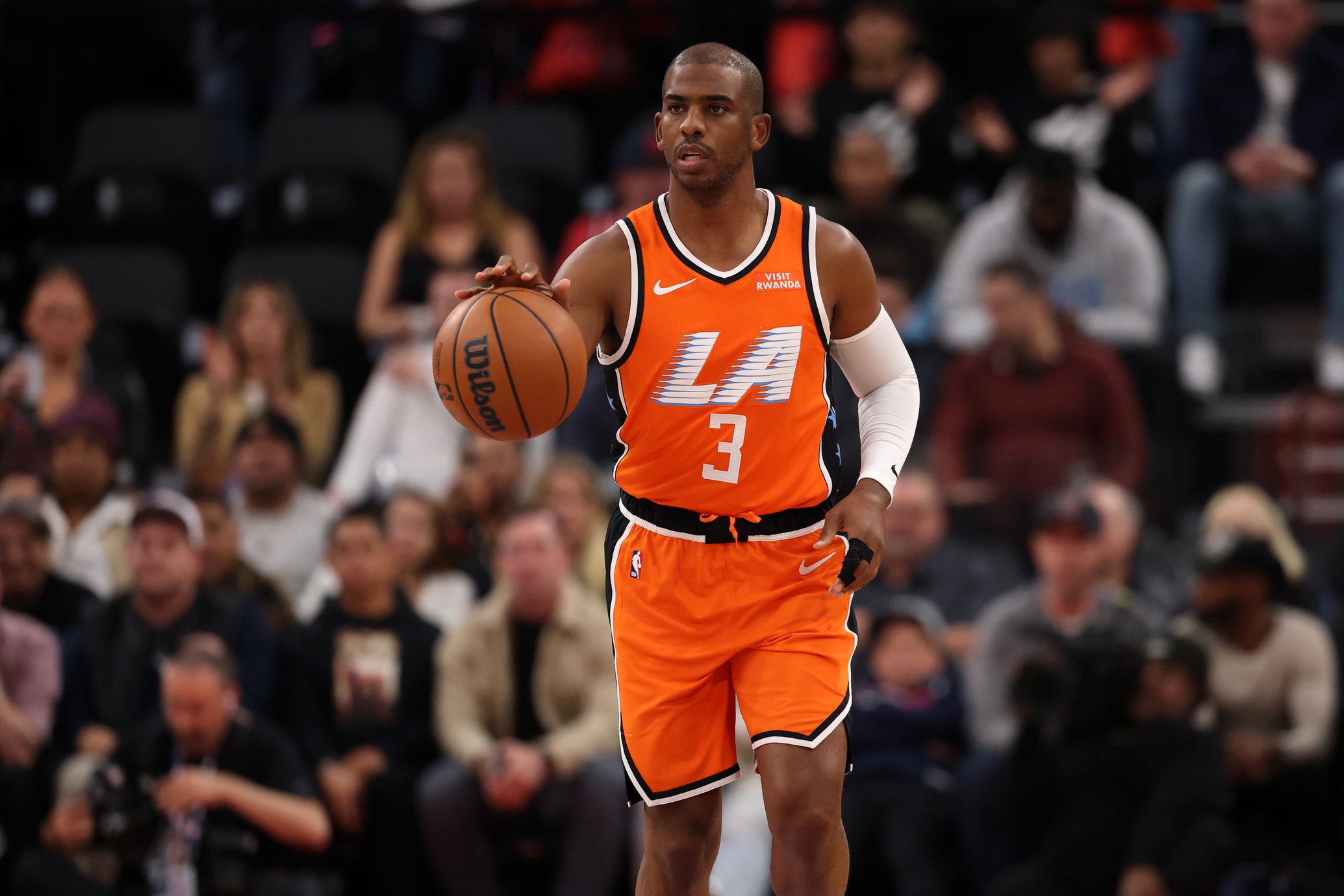
Numbers in the NBA have always been great at telling half a story, and the half they leave out is usually the most important part. A player can average 20 points a game for a decade straight, make a handful of All-Star teams, and retire with a stat line that makes them look like a Hall of Famer, all while never really winning anything on a team scale.
The truth of the matter is that the box score rewards volume, longevity, and minutes, but it has very little to show when it comes to whether any of those accolades actually mattered when the stakes were high. So, let's take a closer look at seven players whose stat lines looked a lot better than their actual careers were.
Doc’s Sports offers NBA expert picks for every game on our NBA predictions page.
Brook Lopez
For the better part of a decade in Brooklyn, Brook Lopez's stat line made him look like he was going to be the Nets' savior, averaging 18.6 points and 7.1 rebounds per game across nine seasons with the franchise. With a solid foundation shooting the ball and a developing 3-point shot, Lopez looked on paper like exactly the kind of modern center a team builds around.
However, the problem was that Lopez never became the difference-maker Brooklyn needed him to be. He was consistently solid, but solid and impactful are two very different things. Opposing defenses regularly exploited him in the pick and roll, and whatever he produced offensively was getting eaten up on the other end game after game. For a player with his stat line, the wins never followed the way they should have.
His career eventually landed him in Milwaukee, where he won a ring in 2021, but don't let that fool you. Lopez averaged just 12.3 points per game that regular season and 11.5 points in the Finals itself, numbers that tell you everything about the role he was actually playing. For Lopez, the stat line always looked better than the situation ever was.
Mark Aguirre
First overall picks carry expectations that most players never fully meet, and the 1981 draft's top selection was no different. Mark Aguirre was taken first overall by the Dallas Mavericks, and early on, things looked like they were heading in the right direction. He recorded 23+ points and 5+ assists per game in three of his first four seasons, made three All-Star teams, and was the kind of scorer who could genuinely take over a game on any given night.
But what the numbers don't show is how consistently he fell flat in crunch time situations and never blossomed into the leader the Mavericks thought they had drafted. Dallas never got past the second round of the playoffs during his years there, and Aguirre built a reputation for not showing up when games mattered most. The Mavericks eventually traded him to Detroit in 1989.
In Detroit, with a reduced role on a team that already had its identity established, Aguirre won consecutive championships with the Bad Boys, but he was far from a factor. He averaged just 12.9 points per game as a Piston across his five years in the Motor City. So, while Aguirre was a scorer, no doubt about that, he was never the guy any team actually needed him to be when it counted most.
Chris Paul
Despite Chris Paul being loved by fans across the world, the reality is that he easily earned himself a spot on this list. Before you get upset, just understand that statistically speaking, Paul may actually be one of the greatest point guards in NBA history. Between owning the all-time assist-to-turnover ratio record, averaging 16.8 points and 9.2 assists per game for his career, and making 12 All-Star teams, the resume is stacked.
But what does Paul bring to the table after that? He reached the NBA Finals once in his 21-year career, in 2021 with Phoenix, and the Suns lost that series. Before that run, he had already developed a pattern of either getting injured at critical moments or simply not delivering when his team needed a closeout performance from its floor general.
It didn't matter which team he played for, either. The Clippers, Rockets, and Thunder all built around him with legitimate rosters and multiple All-Stars, and none of them got past the second round of the playoffs with him as the focal point. Let that sink in.
The best player never to win a championship conversation follows Paul everywhere for a reason. His regular season production is a plus all day, but his postseason track record exposed him to a point where twelve All-Star selections and his assist-to-turnover ratio can't defend him. For a point guard whose entire playstyle was built on control and precision, the number of series that slipped away under his watch is something his stat line alone can't answer.
Kyle Lowry
For a long stretch in the 2010s, Kyle Lowry was widely considered one of the more underrated players in the NBA, and the basketball world eventually made a point of correcting that. He made six All-Star teams, averaged 19.4 points and 7.5 assists per game at his peak, and was one of the main faces of a Raptors franchise that spent years knocking on the door of deep playoff contention.
Knocking on the door is the key phrase there. Lowry was never really the main core piece of any team he suited up for, even during his time in Toronto, where DeMar DeRozan was the real focal point for most of those years. On top of that, Lowry developed a consistent trend of disappearing in elimination games, and the numbers backed it up often enough that it stopped being a coincidence and started being a pattern.
Even though he did get a ring in 2019 when the Raptors won the championship, keep in mind he played a support role at best, averaging just 15 points a game while Kawhi Leonard carried the workload for the majority of that run. One title in a supporting role is a solid career moment, but it doesn't rewrite the story of what Lowry actually was across the bulk of his career—a solid sidekick.
Zach LaVine
Naturally gifted scorers are a dime a dozen in the NBA, but few managed to average 20+ points per game across their career while winning as little as Zach LaVine did. With just two All-Star appearances and an athletic playstyle that allowed him to score on all three levels, LaVine looked like the perfect model of a franchise superstar on paper, and the numbers made that case easy to believe.
The reality never matched the resume. LaVine spent his entire career on bad teams, and his presence never did anything to change that. The Bulls were a bottom feeder for the eight seasons he was there. And rather than elevating the roster around him, LaVine was known for being more concerned with his own scoring than anything happening on the other end of the floor.
The reason only struggling franchises ever came calling for LaVine tells you everything you need to know. When he eventually landed in Sacramento, one of the worst franchises in the Western Conference, nothing changed. He posted his 20.6 points a night with the Kings, but contending teams with real playoff aspirations never viewed him as a piece worth acquiring, and that said more about his actual value than his scoring average ever could.
Paul George
Nine All-Star selections, four All-Defensive team honors, and a career average of 20.5 points, 6.2 rebounds, and 3.7 assists per game. On paper, Paul George put together one of the cleaner resumes of his generation at the wing, and nobody is going to sit here and tell you those regular stats and accolades don't back it up.
After a solid run in Indiana where he genuinely looked like a franchise player in the making, taking the Pacers to the Eastern Conference Finals in 2014, George's career took a fast drop right after. He had issues staying healthy, and at one point during his time in Oklahoma City, he even admitted he was better suited as a second option than as the guy, which would be fine if he had actually been reliable in that role. Between the injuries and the playoff choking, George spent the better part of a decade finding new ways to come up short when it mattered most, while still collecting max contracts along the way.
George couldn't be the guy, and he wasn't reliable enough as a second option, either. For a player with his stat line and his reputation, it's exactly why his career looks a whole lot better on paper than it ever really looked.
Get NBA picks on every single game, or if you want our very best bets by the experts, sign up for your free $60 account with a guarantee.
Most Recent NBA Handicapping
- 2026 Golden State Warriors Predictions with Best Bets and Odds to Win NBA Championship
- 2026 Detroit Pistons Predictions with Best Bets and Odds to Win NBA Championship
- 2026 Houston Rockets Predictions with Best Bets and Odds to Win NBA Championship
- 2026 Denver Nuggets Predictions with Best Bets and Odds to Win NBA Championship
- 2026 Dallas Mavericks Predictions with Best Bets and Odds to Win NBA Championship
- 2026 Chicago Bulls Predictions with Best Bets and Odds to Win NBA Championship
- 2026 Cleveland Cavaliers Predictions with Best Bets and Odds to Win NBA Championship
- 2026 Charlotte Hornets Predictions with Best Bets and Odds to Win NBA Championship
- 3-for-1 NBA Basketball Picks Season Special
- 2026 Boston Celtics Predictions with Best Bets and Odds to Win NBA Championship