
6 NBA Players Who Were Better as Sidekicks Than Superstars
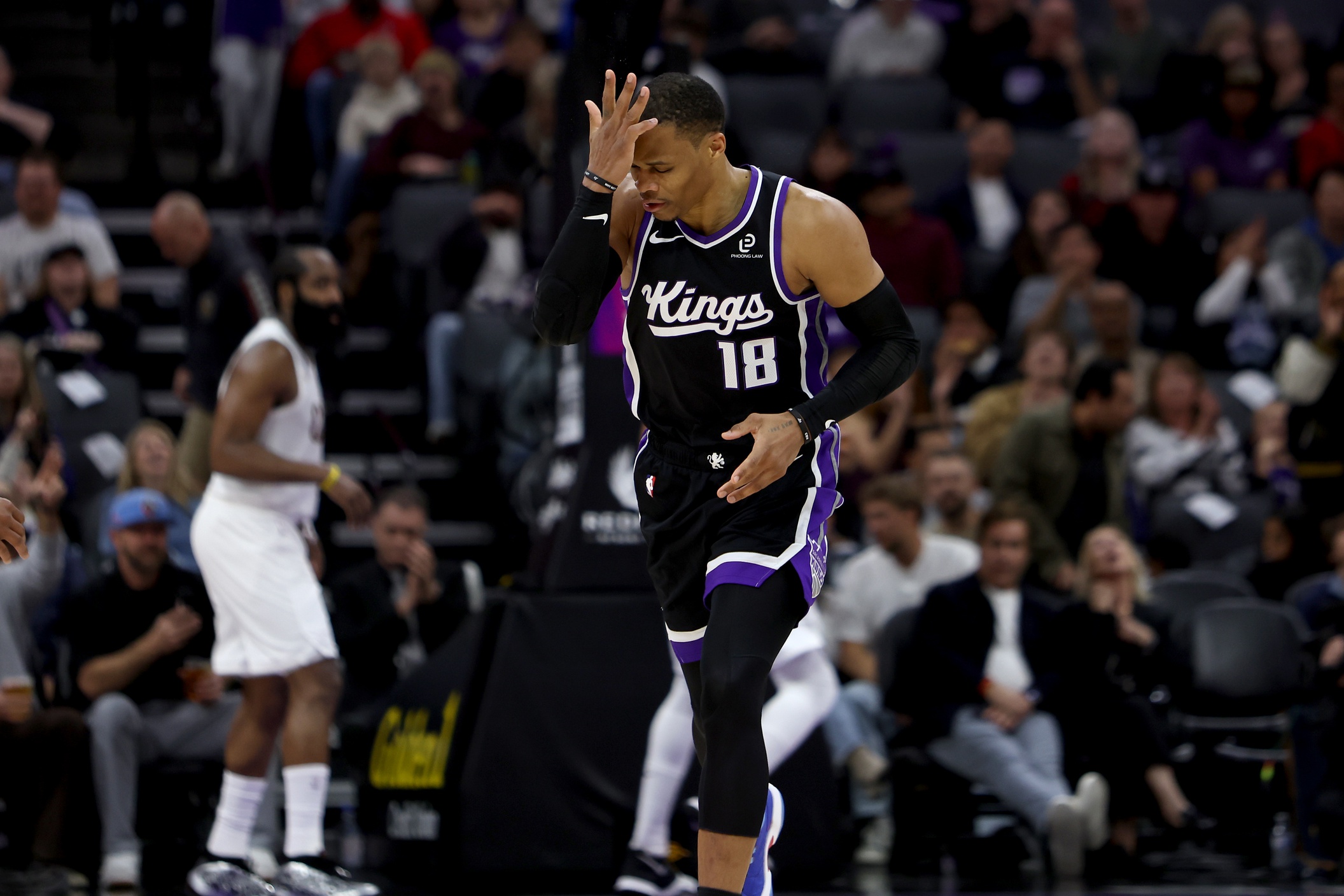
Not every great player was built to carry a franchise, and the ones who found that out the hard way usually did it in the most public way possible. Whether they like it or not, some players thrive when the pressure is shared, when there's a "LeBron" or a "Kobe" taking the spotlight and the responsibility. And the moment that safety net disappears, so does everything that made them look special.
The NBA has seen plenty of players who were genuinely brilliant in a supporting role, lockdown defenders, elite secondary scorers, or just high IQ role players who made winning teams even better. The moment those same players were asked to step into the lead role, the results told a completely different story. So, let's take a look at six players who were simply better off letting someone else be the face of the team.
Doc’s Sports offers NBA expert picks for every game on our NBA predictions page.
Kyrie Iriving
Still to this day, NBA fans debate whether Kyrie Irving made one of the dumbest decisions of his career when in 2017 he demanded a trade out of Cleveland after winning the NBA Finals with LeBron James by his side.
Irving was coming off an incredible championship run, posting 25.2 points and 4.7 assists during the 2015-2016 season. But after an injury the following year, Irving claimed he was ready to step out of James' shadow and carry a team on his own. Boy, was that a big swing and a miss.
He got his wish and landed in Boston, promising Celtics fans he would take them to the next level. Over his two seasons there he averaged 24.1 points and 6.1 assists per game—less than what he posted in Cleveland. And the locker room dynamic deteriorated, rumors about his leadership style followed him everywhere, and he left without honoring the re-signing promise he made to the city after just two seasons.
From there Irving bounced to Brooklyn, where a superstar partnership with Kevin Durant produced plenty of highlights and zero playoff success of any real significance.
What Irving's career ultimately showed was that he was one of the most gifted players of his generation when the responsibility was shared. Alongside James he won a championship in 2016, delivering one of the greatest Finals performances in league history. The moment he was the main guy, the results never matched the talent.
Pau Gasol
For six seasons, the plan in Memphis was simple—build around Pau Gasol and put together a true Western Conference contender. And Gasol hit the ground running from day one, winning Rookie of the Year in 2002 after averaging 17.6 points and 8.9 rebounds, becoming the first non-American player to ever win the award. The talent was never the question. But the team made the playoffs just once during his tenure, and it became clear that the takeover gene just wasn't there. In Memphis, there was nobody else to pick up the slack.
That all changed when the Grizzlies traded him to the Lakers in 2008. Suddenly Gasol didn't need to be the guy, he just needed to be great, and that he did in his sleep. With Kobe Bryant and Derek Fisher alongside him, Gasol was free to focus on what he did best, averaging 17.7 points and 9.9 rebounds a night and winning back to back championships in 2009 and 2010.
The Memphis years weren't a failure, they were just a mismatch. Gasol was never built to be the last option in a close game or the guy a franchise leaned on when things got hard. He was built to be alongside someone who was “the guy”.
Russell Westbrook
Few players in NBA history have put up numbers like Russell Westbrook, who owns the all time record with 207 regular season triple doubles. And after Kevin Durant left for Golden State in 2016, Westbrook went on to average 31.6 points, 10.7 rebounds and 10.4 assists in 2016-2017, becoming only the second player in NBA history to average a triple double for a full season since Oscar Robertson. He then did it again. And again. From an individual standpoint, Westbrook was unbelievable to say the least.
But from a team standpoint, the wins and playoff success were less impressive. Oklahoma City made the playoffs during those years but never advanced past the second round with Westbrook taking the reins, and the style of basketball he played raised legitimate questions about efficiency and team cohesion. His usage rate was among the highest in the league every season, his shooting percentages were wildly inconsistent, and the teams he played for never fully got behind his style of play.
The version of Westbrook that made sense was the one playing alongside other stars like Kevin Durant, where his athleticism, speed and playmaking created problems for defenses already focused on stopping someone else. The moment he was the centerpiece, the limitations became impossible to ignore. He bounced from Oklahoma City to Houston to Washington to L.A. to Denver, and none of those stops produced anything close to what he built alongside Durant.
Andrew Wiggins
Andrew Wiggins arrived in the league in 2014 as the first overall pick, carrying the kind of expectations that come with being the best prospect in a draft class. Minnesota handed him the franchise right off the bat and waited for him to take off. What followed was six years of solid but uninspiring basketball, with Wiggins averaging 19.7 points per game across his time with the Timberwolves while the team made the playoffs once and lost in the first round.
The issue with Wiggins in Minnesota was never the talent. Between the raw athleticism, the natural scoring from all three levels, and the durability of playing over 81 games in each of his first four seasons, the tools were always there. The problem was that he never elevated the players around him or demonstrated the kind of drive that separates good players from leaders. The Timberwolves were consistently mediocre and his presence as the franchise player never changed that.
Minnesota eventually bundled him up and sent him to Golden State in 2020, and it transformed his career almost immediately. Playing alongside Stephen Curry and Draymond Green, Wiggins averaged 16.7 points per game on 53% shooting during the Warriors 2022 championship run and delivered some of the best defensive performances of his career, finally looking like the player everyone thought he could be. But only once someone else was carrying the franchise and he was free to focus on doing his part. Minnesota gave him every opportunity to be the guy. But Golden State showed him what he actually was.
Dominique Wilkins
Nobody in the 1980s put on a show quite like Dominique Wilkins did. A career average of 24.8 points per game, multiple seasons clearing 30, and a highlight reel that holds up decades later. The dunks were legitimate poster material, the mid-range game was tough to guard, and on any given night he was capable of making the rest of the league look like they didn’t deserve to be on the court.
Nine All-Star appearances, a scoring title, and in 12 seasons Atlanta never once made it to the conference finals. At some point you stop blaming the supporting cast.
The Eastern Conference in the 1980s was as competitive as it ever was, and Atlanta still couldn't find a way through it with one of the best scorers in the league on the roster. The team results just never matched the individual ones.
Listen, great players are supposed to carry average rosters further than the conference semifinals, and Wilkins never did that. The Hall of Fame resume is completely earned, but the evidence points to him being better suited as a second scorer next to a true superstar than as the guy a franchise leans on to win. The NBA world just never got to see that version of him.
Dwight Howard
For a stretch in the late 2000s, Orlando thought they had the next great big man. Dwight Howard averaged 22.9 points and 14.1 rebounds per game across his eight seasons with the Magic, won three consecutive Defensive Player of the Year awards, and carried Orlando to the NBA Finals in 2009, where they fell to the Lakers.
But the problem is it never translated anywhere else after that. Howard bounced around the league, and the results were the same everywhere he landed. The offensive limitations got exposed, the locker room issues followed him from city to city, and the player who looked like a generational talent in Orlando looked out of place every time a franchise handed him the keys.
It wasn't until 2020, when Howard joined the Lakers in a supporting role behind LeBron James and Anthony Davis, that everything finally clicked. He averaged 7.5 points and 7.3 rebounds that season, protected the rim, and walked away with a championship ring. That's the version of Howard that actually worked.
The Orlando years were impressive enough to fool everyone into thinking he was a franchise guy. Everything after them made the case that he was always better off as a reliable rim protector and a supporting piece than the player a franchise hands the ball to and says, figure it out.
Get NBA picks on every single game, or if you want our very best bets by the experts, sign up for your free $60 account with a guarantee.
Most Recent NBA Handicapping
- 2026 Golden State Warriors Predictions with Best Bets and Odds to Win NBA Championship
- 2026 Detroit Pistons Predictions with Best Bets and Odds to Win NBA Championship
- 2026 Houston Rockets Predictions with Best Bets and Odds to Win NBA Championship
- 2026 Denver Nuggets Predictions with Best Bets and Odds to Win NBA Championship
- 2026 Dallas Mavericks Predictions with Best Bets and Odds to Win NBA Championship
- 2026 Chicago Bulls Predictions with Best Bets and Odds to Win NBA Championship
- 2026 Cleveland Cavaliers Predictions with Best Bets and Odds to Win NBA Championship
- 2026 Charlotte Hornets Predictions with Best Bets and Odds to Win NBA Championship
- 3-for-1 NBA Basketball Picks Season Special
- 2026 Boston Celtics Predictions with Best Bets and Odds to Win NBA Championship