
6 Absurd Things NFL Players Did to Get Out of Their Contracts
Most players who want out of town let their agent work the phones and wait for the trade rumors to start. Others turn a contract dispute into a full-blown circus and pull whatever stunt they can to get themselves out of dodge.
From driveway workouts to an entire season spent on the couch, these six players went to ridiculous lengths to escape teams they no longer wanted to play for. Some got exactly what they wanted. Others got a lot more than they bargained for. Let's check it out.
Doc’s Sports offers NFL expert picks for every game on our NFL predictions page.
Duane Thomas (Cowboys, 1971)
A strong rookie season usually earns a player some leverage, and Duane Thomas had more than most. He didn't crack the starting lineup until the fifth game, yet still led the Cowboys with 803 rushing yards and the entire league with 5.3 yards per carry while helping Dallas reach Super Bowl V. When the team refused to rework his deal, Thomas called head coach Tom Landry a “plastic man,” accused player personnel director Gil Brandt of being a liar and called team president Tex Schramm sick, demented and completely dishonest.
Torching every bridge in the front office made Thomas nearly impossible to keep, and skipping training camp sealed it. The Cowboys traded him to the Patriots, and he lasted less than a week in New England. Thomas refused to line up in a three-point stance when Patriots head coach John Mazur told him to, and commissioner Pete Rozelle voided the trade and sent him back to Dallas.
Back with the Cowboys, Thomas took a vow of silence. He still led the league with 13 total touchdowns, and Dallas won Super Bowl VI with Thomas running for 95 yards and scoring a touchdown against the Dolphins. Not even a ring could fix the relationship, and the Cowboys traded him to San Diego before the next season.
Terrell Owens (Eagles, 2005)
Eagles fans got exactly one drama-free season out of Terrell Owens, and it was a monster one. He caught 77 passes for 1,200 yards and 14 touchdowns in 14 games, then played Super Bowl XXXIX seven weeks after breaking his leg and still put up nine catches for 122 yards. After the season, he hired agent Drew Rosenhaus and decided his seven-year, $49 million deal wasn't cutting it. Owens even claimed he needed a new contract to feed his family. His family was apparently eating just fine on the $7.5 million he made the year before.
A shouting match with head coach Andy Reid got Owens sent home from training camp, and most players would have laid low. Owens put on a show instead. Reporters followed him to his home in Moorestown, N.J., where he worked out shirtless in the driveway, cranking out sit-ups on a bench while answering questions.
Things got even uglier once the games started. Owens clashed with quarterback Donovan McNabb and blasted the Eagles for a lack of acknowledgment after Owens had caught his 100th career touchdown. Philadelphia suspended him four games without pay and deactivated him for the rest of the year.
Owens fought the punishment and asked to either reinstate him or release him so he could sign somewhere else. Fast forward, Owens landed with the division rival Cowboys on a three-year, $25 million deal days later. The kicker? Philadelphia went 17-5 with him in the lineup, playoffs included, and 4-9 without him.
Albert Haynesworth (Redskins, 2010)
There's a bold strategy in cashing a massive check and then refusing to show up, and Albert Haynesworth committed to it fully. Washington had already paid him $32 million when new head coach Mike Shanahan switched to a 3-4 defense. Haynesworth hated the scheme, asked for a trade and skipped the offseason program, mandatory minicamp included.
Washington's answer? Assigning Haynesworth a conditioning test that no other player on the roster had to take. Two timed 300-yard shuttle runs stood between Haynesworth and the practice field, and he couldn't get through them.
A swollen knee wiped out a chunk of time as well, and the saga ended with Haynesworth suspended without pay for the final four games of the season. All that money bought Washington a grand total of 20 games. New England took a chance on him for a fifth-round pick and cut him before his first season there was over, so the Patriots got the short version of the same experience.
Carson Palmer (Bengals, 2011)
Most quarterbacks would kill for a starting job and an $11.5 million salary. Carson Palmer wanted neither if it meant staying in Cincinnati. After a 4-12 season, the former No. 1 overall pick demanded a trade and said he'd rather retire than set foot in Paul Brown Stadium again.
Cincinnati's front office called his bluff, with owner Mike Brown insisting a trade would set a bad example for the rest of the team. It wasn't a bluff. Palmer skipped training camp, stayed home when the season started and watched the Bengals hand his locker to rookie Andy Dalton.
The standoff broke at the trade deadline after Raiders starter Jason Campbell got hurt. Oakland sent a 2012 first-round pick and a 2013 second-rounder to Cincinnati. Palmer threw 13 touchdowns and 16 interceptions in 10 games for his new team, but the deal didn't work out for Oakland. The Raiders flipped him to Arizona after two seasons, and he eventually led the Cardinals to the NFC Championship Game.
Le'Veon Bell (Steelers, 2018)
Most players would sign a franchise tag and stress about it later. Le'Veon Bell turned down a five-year, $70 million offer from the Steelers, and Pittsburgh tagged him for a second straight year. No running back had ever gotten back-to-back tags since free agency was implemented in 1993.
Instead of signing for $14.5 million, Bell stayed home. The holdout cost him roughly $855,000 for every game he missed, and his season officially ended once he blew past the signing deadline. He dropped a rap album right before landing his next contract and titled it Life's a Gamble. At least he was self-aware.
A year earlier, Bell had tweeted that not even $60 million would get him to play for the Jets. He signed with them for four years and $52.5 million, and his first-year pay in New York matched the $14.5 million he walked away from in Pittsburgh. I guess that's why they say never say never, huh?
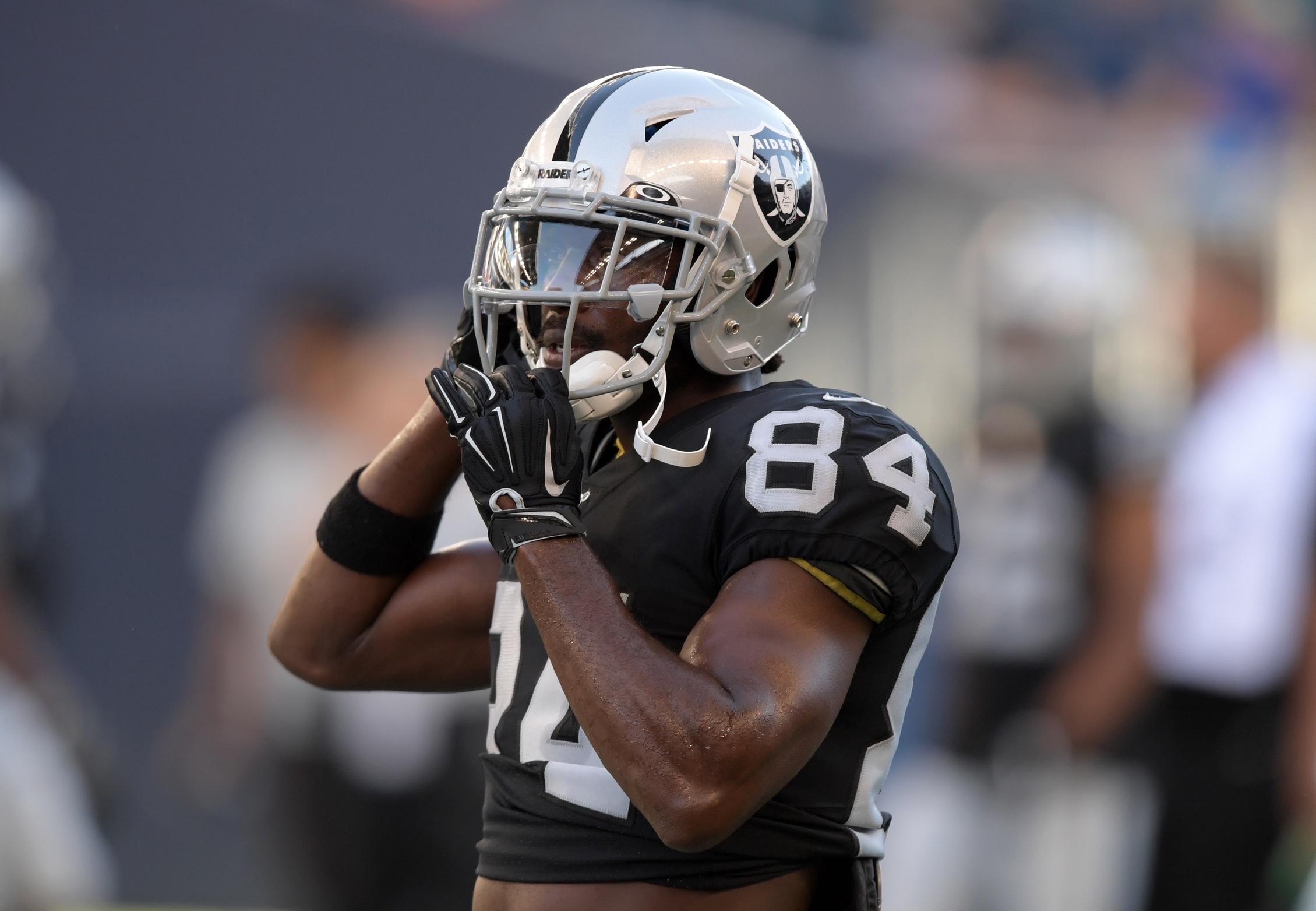
Antonio Brown (Raiders, 2019)
Plenty of players have forced their way out of a franchise, but Antonio Brown might be the first one to ask social media nutjobs how to speed things up. Judging by how the rest went, they earned their fee. His short stay with the Raiders peaked when he posted a letter from general manager Mike Mayock detailing nearly $54,000 in fines, then got into a heated confrontation with Mayock at practice.
An apology to his teammates came next, and it didn't last long. Brown released a recorded phone call with head coach Jon Gruden, and the audio caught Gruden urging him to drop the theatrics and just play football. The Raiders answered with a $215,073.53 fine for conduct detrimental to the team, and the fine voided $29.125 million in guaranteed money.
Brown didn't let up, posting an Instagram message the next morning demanding his release. Oakland obliged two days before the season opener, and Brown signed with the Patriots that same day. His Raiders career ended without a single regular-season snap.
Get NFL picks on every single game, or if you want our very best bets by the experts, sign up for your free $60 account with a guarantee.
Most Recent NFL Handicapping
- 6 Absurd Things NFL Players Did to Get Out of Their Contracts
- Best NFL Teaser Bets Week 12: Basic Strategy Teasers Advice
- NFL Week 12 Line Movements with Point Spread Analysis
- NFL Betting Predictions: Week 12 Opening Line Report and Best Bets
- 6 Times NFL Players Lost Millions on Absurd Off-Field Business Ventures
- 6 Strange Equipment Obsessions That Cost NFL Players Thousands in Fines
- Best NFL Teaser Bets Week 11: Basic Strategy Teasers Advice
- NFL Week 11 Line Movements with Point Spread Analysis
- NFL Betting Predictions: Week 11 Opening Line Report and Best Bets
- NFL Week 10 Line Movements with Point Spread Analysis