6 Times NFL Players Lost Millions on Absurd Off-Field Business Ventures
Pro football careers are short, so it makes sense that players start thinking about life after the game while they’re still cashing NFL checks. A restaurant here, a little real estate there, and the money keeps rolling in long after their bodies take a beating on the turf.
Some of the biggest names in the league found out the hard way that a playbook doesn’t come with a business degree. Six of them poured their fortunes into ventures that ranged from risky to flat-out ridiculous and watched millions disappear. Let’s break down players who lost millions making those risky business decisions.
Doc’s Sports offers NFL expert picks for every game on our NFL predictions page.
Johnny Unitas, Baltimore Colts (1991)
Long before athletes had financial advisers on speed dial, one of the greatest quarterbacks ever was out there playing small-business owner, and the results were ugly. Johnny Unitas opened Maryland's first tenpin bowling alley in 1961, and it was bankrupt within three years. Instead of taking the hint, he kept rolling the dice on a prime-rib restaurant, an air-freight company and Florida real estate. None of them panned out.
The biggest head-scratcher came in 1984, when Unitas and two partners bought a circuit board manufacturer outside Baltimore. Yes, the guy who threw for more than 40,000 yards decided electronics was his next calling. He borrowed money from the state of Maryland and the city of Baltimore to keep the lights on, and the company went under anyway, with its assets sold off for about $1 million.
Unitas and his wife filed for personal bankruptcy in 1991. The legal mess dragged on long after his death, and Maryland taxpayers got stuck footing much of the bill for a business the Colts legend never should have touched. Not exactly a good retirement off the field for one of the best to ever do it.
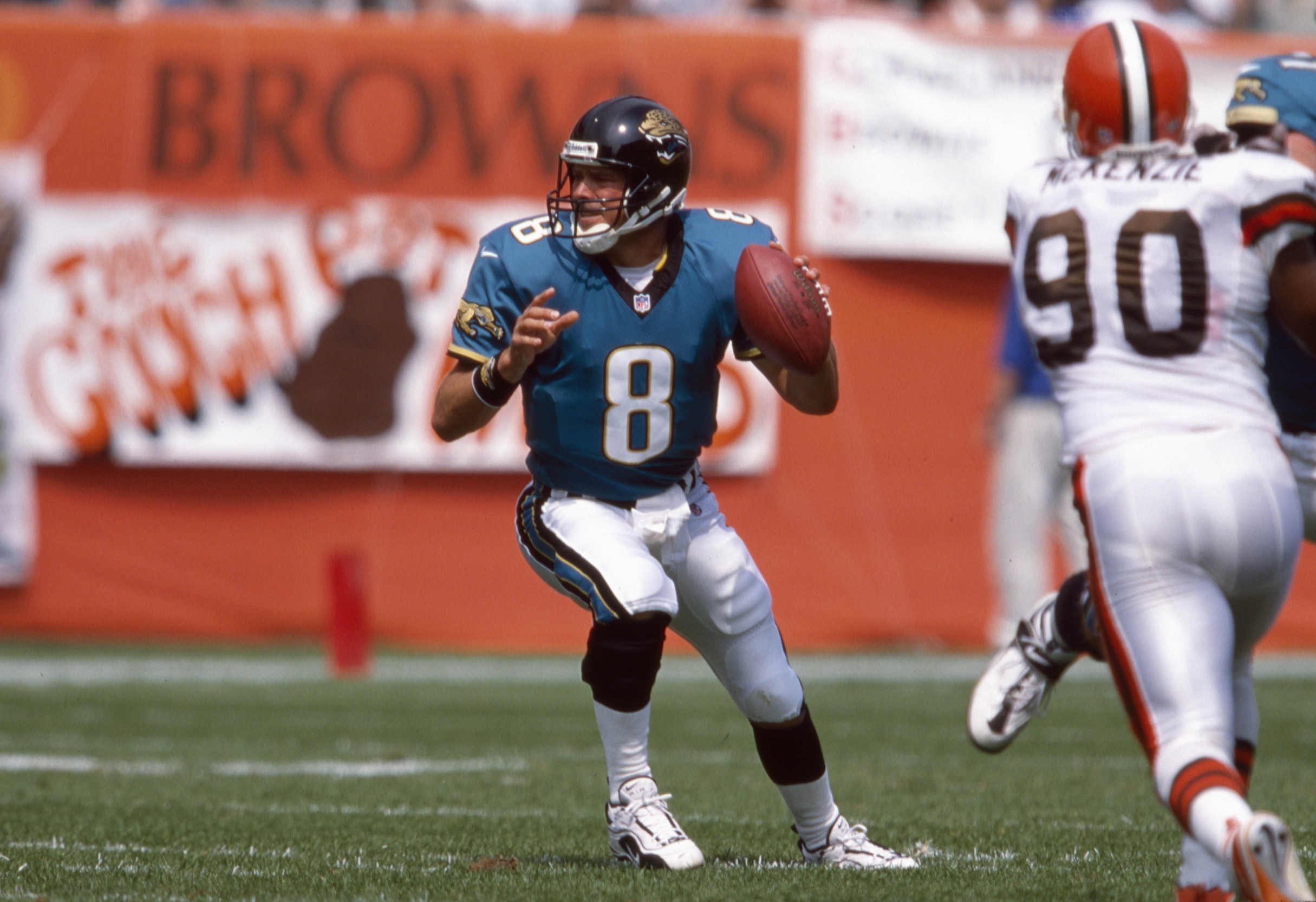
Mark Brunell, Jacksonville Jaguars (2010)
Burgers and condos in Jacksonville sounded like a can't-miss retirement plan for the Jaguars' first franchise quarterback. Mark Brunell teamed up with former teammates Joel Smeenge and Todd Fordham on a real estate company called Champion LLC, then grabbed a stake in 12 Whataburger restaurants on the side. What could go wrong, right?
The group bought property at the very top of the market, and Brunell personally guaranteed millions in loans like the housing bubble was never going to pop. Well, it popped. He went into Chapter 11 in 2010 owing $24.7 million against $5.5 million in assets, and Smeenge landed in bankruptcy court too.
Brunell was still holding a clipboard behind Mark Sanchez with the Jets when it all came crashing down. His bankruptcy plan made sure he kept the Super Bowl ring he'd won as a Saints backup, but his finances off the field were nowhere near as steady as his backup quarterback paychecks, leaving him about $19 million in the hole.
Raghib “Rocket” Ismail, Los Angeles Raiders (1990s)
Some players make one bad investment, and Raghib “Rocket” Ismail apparently tried to collect the whole set. He was the presumed No. 1 pick in 1991, then passed on the Cowboys to sign a four-year deal with the Toronto Argonauts worth $18.2 million guaranteed.
Later on, the Raiders took a flier on him in the fourth round with the 100th pick, and he joined them two years later. With that kind of money rolling in, plenty of it went toward a business plan nobody should ever copy. Ismail funded a religious-themed movie, a music label, a cosmetic treatment and a company that stuck phone card dispensers in stores. He also bankrolled kiosks that wrote proverbs in calligraphy, and it's safe to say mall shoppers weren't lining up for those.
To his credit, Ismail never went bankrupt, and one bet actually hit. He put money into Bitetech, a mouthguard company that ended up owned by Under Armour.
Terrell Owens and Clinton Portis, Country Crossing (2010)
Casinos are supposed to take money from gamblers, but one in Alabama cleaned out NFL players instead. Country Crossing was pitched as an entertainment complex with around 2,000 electronic bingo machines, and financial adviser Jeff Rubin steered dozens of his NFL clients into it. Wouldn't you know it, he owned a 4% stake in the place himself.
Terrell Owens put in about $2 million, Clinton Portis loaned the project $1 million, and players like Fred Taylor and Vernon Davis bought in too. Less than two weeks after the grand opening, a state gambling task force raided the casino and shut it down.
NFL players lost tens of millions of dollars, and the fallout wasn't pretty. The developer pleaded guilty to offering bribes to state legislators, and Rubin got banned from the securities industry. Owens and Portis both ended up suing lawyers tied to the deal, trying to claw back money that was already long gone.
Deuce McAllister, New Orleans Saints (2009)
A car dealership with a star running back's name on the sign sounds like a license to print money, but that wasn’t the case. Deuce McAllister opened a Nissan dealership in Jackson, back in his home state of Mississippi, and found out the hard way that selling cars is a lot harder than running through linebackers.
Nissan's finance arm flagged problems during an audit, sent a monitor to babysit the place and still watched the debts pile up. The dealership sought bankruptcy protection in 2009, right after the Saints cut him, and Nissan sued for more than $1.5 million.
McAllister fired back, arguing Nissan knew it was dealing with a young athlete with zero experience selling cars. The two sides eventually settled, but the dealership mess followed him all the way home, and his house was later set for auction.
Dermontti Dawson, Pittsburgh Steelers (2010)
Centers spend their whole careers protecting somebody else, and one of the best ever forgot to protect himself. Dermontti Dawson took over for Hall of Famer Mike Webster in Pittsburgh, played in 170 straight games and made seven consecutive Pro Bowls over 13 seasons. Once he hung up the cleats, he headed back home to Kentucky and jumped into real estate development.
Dawson held minority stakes in the properties, so he never got the final say, and he still put his name on the debt for project after project. Think of it as co-signing a buddy's car loan and never getting the keys. When the real estate market tanked, those personal guarantees pushed him into Chapter 7 in 2010, and the filing listed more than $69 million in liabilities against about $1.4 million in assets.
Two years later, Dawson was inducted into the Pro Football Hall of Fame, which makes for one wild trip from bankruptcy court to a spot in Canton.
Get NFL picks on every single game, or if you want our very best bets by the experts, sign up for your free $60 account with a guarantee.
Most Recent NFL Handicapping
- 6 Times NFL Players Lost Millions on Absurd Off-Field Business Ventures
- 6 Strange Equipment Obsessions That Cost NFL Players Thousands in Fines
- NFL Week 11 Line Movements with Point Spread Analysis
- Best NFL Teaser Bets Week 11: Basic Strategy Teasers Advice
- NFL Betting Predictions: Week 11 Opening Line Report and Best Bets
- NFL Week 10 Line Movements with Point Spread Analysis
- Best NFL Teaser Bets Week 10: Basic Strategy Teasers Advice
- NFL Betting Predictions: Week 10 Opening Line Report and Best Bets
- Keenan Allen Trade from Indianapolis Colts to San Francisco 49ers: Betting Impact
- Jacksonville Jaguars Trade with Philadelphia Eagles for DT Jordan Davis: Betting Impact